

Involution, not Evolution: the Metaphysical Frame
Short Notes on a Current Debate

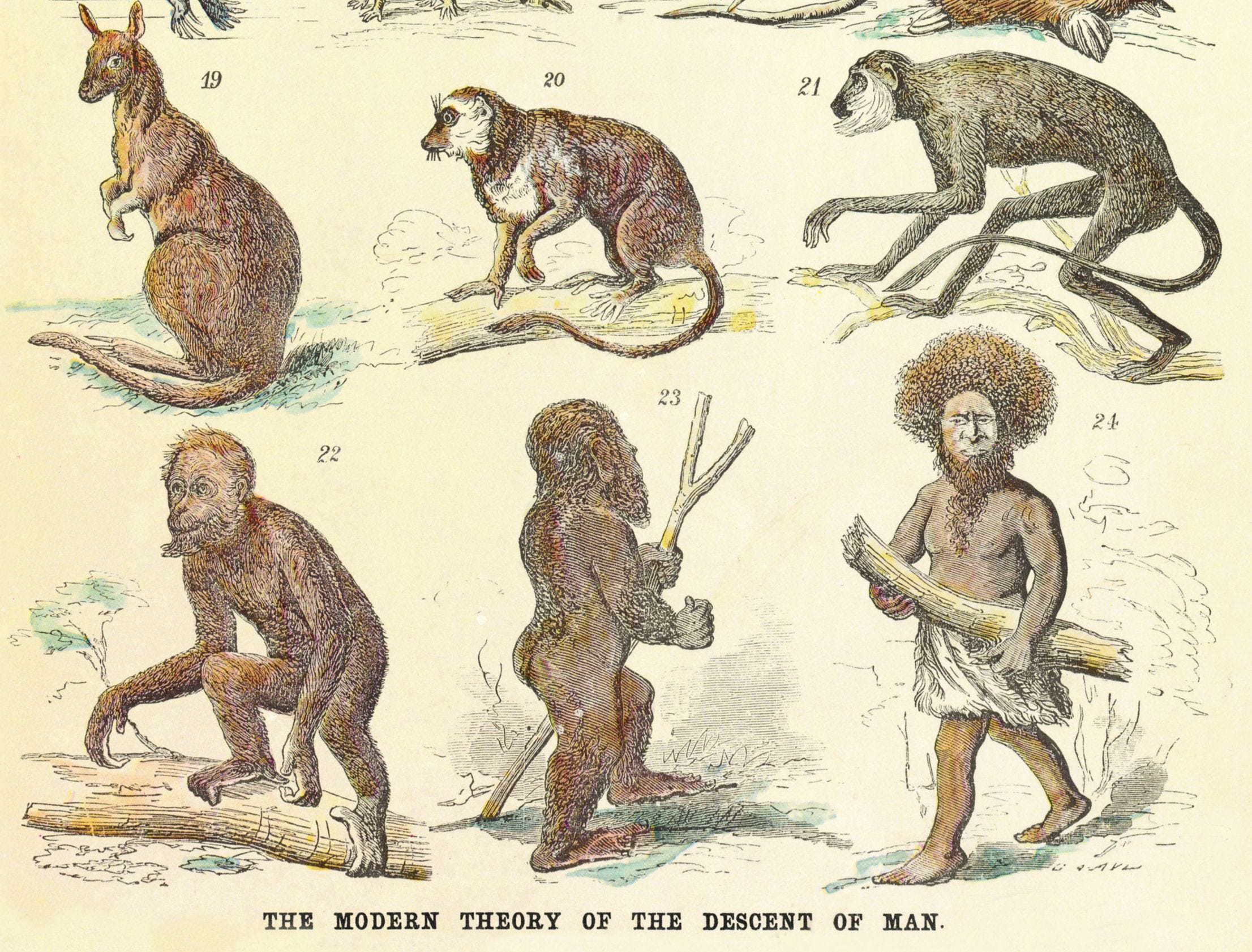
The marginalization or even exclusion of scholastic thought, a specific symptom of the current neo-modernist crisis, is one of the features of post-conciliar Catholic theology. While its rejection characterizes all modern secular thought, we must also note the existence of some hierarchs of the Church who have embraced the same attitude.
For example, in his books entitled Theologie und Kirche (Theology and Church) and published in 1987, Cardinal Walter Kasper announced the marginalization (if not even the exclusion) of (neo-)Thomistic thought, stating the following:
There is no doubt that the outstanding event in the Catholic theology of our century is the surmounting of neo-scholasticism.
Very probably, His Eminence had primarily in mind the marginalization of neo-Thomist theologians and philosophers such as Réginald Marie Garrigou-Lagrange, Édouard Hugon, and Antonin-Gilbert Sertillanges. However, Cardinal Kasper was not original in this respect. The rejection of scholastic thought, whose master was Saint Thomas Aquinas, had already been announced by Bertrand Russell in a lecture delivered in 1927:
It is true that Scholastics invented what professed to be logical arguments proving the existence of God, and that these arguments, or others of a similar tenor, have been accepted by many eminent philosophers, but the logic to which these traditional arguments appealed is of an antiquated Aristotelian sort which is now rejected by practically all logicians except such as are Catholics.
Indeed, Russell was right. In 1927, there still existed Catholics who professed the Scholastic logic and worldview. Today, they no longer exist. Even if we acknowledge a brilliant contemporary successor such as Dr. Edward Feser, at the level of theological formation in Catholic seminaries and universities, psychoanalysis and psychotherapy are usually more fashionable than Saint Thomas Aquinas and Blessed Duns Scotus.
Nothing illustrates this disastrous situation better than the rejection and abandonment of the hylomorphic doctrine, which holds that every object in the physical world is composed of the conjunction of two metaphysical principles called “matter” and “form.” This doctrine, developed by Plato and Aristotle and assimilated by the Roman Catholic Church through the works of Saint Thomas Aquinas, makes impossible both the acceptance of atomism and that of evolutionism—both of which, unfortunately, are nowadays embraced by numerous Catholic authors. For such thinkers, tempted by the error of evolutionism, I shall briefly present the metaphysical foundations that allow its rejection.
First, we must note that there exists an explicit condemnation of evolutionism by the German bishops. In a document issued by a local council held in Cologne in 1860, they stated the following:
Primi parentes a Deo immediate conditi sunt. Itaque Scripturæ sanctæ fideique plane adversantem illorum declaramus sententiam, qui asserere non verentur, spontanea naturæ imperfectioris in perfectiorem continuo ultimoque humanam hanc immutatione hominem, si corpus quidem species, prodidisse.
Our first parents were formed immediately by God. Therefore we declare that the opinion of those who do not fear to assert that this human being, man as regards his body, emerged finally from the spontaneous continuous change of imperfect nature to the more perfect, is clearly opposed to Sacred Scripture and to the Faith.
The Vatican has never denied or revoked this statement. The biblical foundation is affirmed without any ambiguity. The teaching in whose name the German bishops reacted is that of the creation of man by God. Thus, man—although not yet at the highest level of perfection, namely that of the beatific vision—was created complete from the very beginning, body and soul.
The bodies of Adam and Eve could not have undergone any “evolution” from an imperfect nature to a perfect one. This excludes attempts to separate the bodily dimension of man from the spiritual one in order to support the theory of human evolution from apes. We must also not forget that the dogma of original sin implies an involution of man (as well as of universal history), not an evolution. To understand these things presupposes a formation in which meditation and reflection on original sin and its consequences occupy a central place.
Following the thought of Saint Thomas Aquinas, the Church adopted the conception of the soul as the “substantial form” of the body (“matter”). I emphasize that this is official doctrine of the Catholic Church, as Dr. Edward Feser has already stated. To demonstrate this, one may consult the Catechism:
The unity of soul and body is so profound that one has to consider the soul to be the ‘form’ of the body: i.e., it is because of its spiritual soul that the body made of ‘matter’ becomes a living, human body; spirit and matter, in man, are not two natures united, but rather their union forms a single nature (art. 365).
For all major Catholic thinkers after the Angelic Doctor, the mentioned theory of hylomorphism excludes any evolutionary hypothesis. Why is it so? Because the “substantial forms” at the foundation of all creatures and objects in our physical world are intelligible entities created directly by God. These entities—also called “essences,” “substances,” or “ideas” of beings and things—cannot undergo an “evolution.” Nor can man manipulate or transform them in any way. A “substantial form” cannot change into another form. Only God can do this, as seen in the Church’s teaching on the Holy Eucharist, which affirms that at the moment the priest pronounces the words of Our Lord Jesus Christ from the night of the Last Supper, the “forms” of bread and wine are replaced by God Himself with the “substances” of His Body and Blood.
Obviously, the rejection of evolutionism presupposes the existence of a certain philosophical framework that allows, as far as possible at our current post-lapsarian level of knowledge, an explanation of the existence of beings and things in our world. If, however, this framework is rejected, then man and the world are explained in strictly material terms, in which invisible particles—such as atoms—are the “bricks” from which everything is made. I may surprise some readers by saying that, from the perspective of classical Aristotelian-Thomistic metaphysics, the transformation of forms (i.e., “transformism”) is just as unacceptable as the modern atomic model. With this statement, I merely wish to remind you that without a solid philosophical/metaphysical formation, discussions about the origins of man and the world can only lead to endless errors.